
Mental health is often harder to see than physical illness.
A person may appear completely fine from the outside while struggling privately with anxiety, depression, addiction, family pressure, trauma, or other psychological difficulties.
And in communities where mental health is not discussed openly, people may delay seeking help—not necessarily because support is unnecessary, but because they may not know where to go, how to talk about what they are experiencing, or whether they will be understood.
These questions are increasingly important when discussing mental health in Parachinar, particularly among young people.
How common are psychological problems in the community?
Why are some young people becoming involved with drugs?
What role do family environments and parenting play?
How early should mental-health awareness begin?
And does Kurram need more dedicated rehabilitation and psychological-support services?
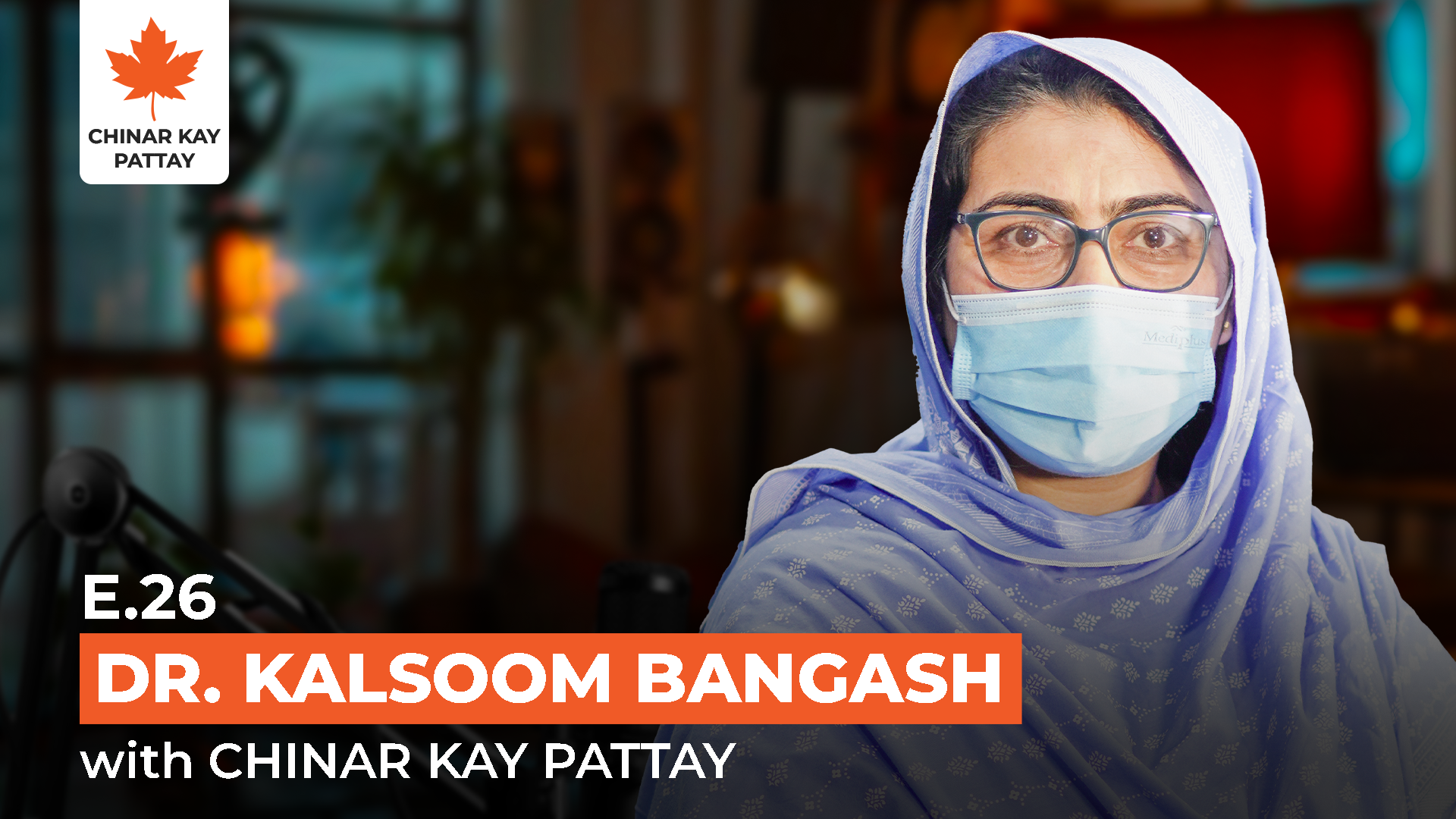
In Episode #026 of the Chinar Kay Pattay Podcast, host Shahid Hussain sits down with Dr. Kalsoom Bangash, a psychologist from Parachinar, for a detailed conversation about mental health, drug addiction, family environments, child development, rehabilitation, and psychological awareness in the region.
The discussion also explores Dr. Kalsoom’s own journey into psychology, the types of difficulties she encounters in her professional work, patient recovery experiences, and why she believes stronger support systems are needed in Kurram.
This is not simply a conversation about illness.
It is also a conversation about families, young people, education, awareness, prevention, and how a community responds when someone needs psychological help.
Watch the Full Podcast
Chinar Kay Pattay Podcast #026
Guest: Dr. Kalsoom Bangash
Host: Shahid Hussain
Profession: Psychologist
Topic: Mental Health, Drug Addiction, Youth and Family Challenges in Parachinar
The complete conversation is available on the official Chinar Kay Pattay YouTube channel.
Table of Contents
Episode Timestamps
00:00:00 — Trailer
A glimpse into the discussion on mental health, young people, addiction and social challenges in Parachinar.
00:02:17 — Introduction
00:04:27 — Most Common Psychological Disorders in Parachinar
00:06:35 — Why Dr. Kalsoom Chose to Become a Psychologist
00:10:06 — Ratio of Psychological Patients in Parachinar
00:15:12 — The Youth of Parachinar and Drug Addiction
00:23:23 — Success Stories of Dr. Kalsoom’s Patients
00:26:44 — Rehabilitation Center in Parachinar
00:29:40 — Underage Marriages & Home Environment Challenges
00:37:04 — Raising Mentally Stable Children
00:43:34 — Types of Drugs and Their Effects
00:47:04 — Message to Her Parents
00:48:09 — Chinar Kay Pattay — Closing Segment
Understanding Mental Health in Parachinar
One of the first barriers to addressing mental health is recognising that psychological difficulties are real health concerns.
People may experience emotional distress in very different ways.
Some struggle with persistent sadness.
Others experience fear, anxiety, irritability, sleep problems, social withdrawal, substance use, behavioural changes, or difficulties functioning in everyday life.
But not every psychological problem looks the same, and symptoms should not automatically be turned into a diagnosis by family members, friends, or social media.
That is why access to qualified mental-health professionals matters.
In the conversation, Dr. Kalsoom Bangash discusses some of the psychological difficulties she encounters through her work in Parachinar and explains why awareness around mental health needs to improve.
The discussion highlights a fundamental point:
people need to be able to ask for psychological help without automatically being judged, labelled, or dismissed.
Mental-health awareness does not mean diagnosing everyone.
It means recognising when someone may need professional support and creating an environment where seeking that support is considered normal rather than shameful.
Psychological Problems People May Be Struggling With
The episode explores psychological conditions that Dr. Kalsoom encounters in her work.
The YouTube description specifically highlights issues including depression and anxiety, alongside the wider concern of drug addiction among young people.
These subjects are important because psychological difficulties can affect much more than mood.
They may influence:
- education;
- work;
- family relationships;
- physical wellbeing;
- decision-making;
- sleep;
- social interaction;
- and a person’s ability to manage everyday responsibilities.
However, mental-health conditions should not be self-diagnosed based on a short list of symptoms.
Two people experiencing similar difficulties may have very different underlying causes.
Professional assessment is important because treatment and support should respond to the individual rather than simply to a label.
For CKP’s audience, perhaps the most useful starting point is simply this:
psychological health deserves the same seriousness we give to other areas of health.
Dr. Kalsoom Bangash’s Journey into Psychology
An important part of the episode focuses on why Dr. Kalsoom chose psychology as her professional path.
Understanding the person behind the profession gives the conversation a different dimension.
Psychologists do not work only with diagnoses or textbook definitions.
Their work involves listening to people’s experiences, understanding behaviour, exploring emotional difficulties, and helping individuals and families work through problems that may be difficult to discuss elsewhere.
For a region such as Kurram, having local professionals who understand the language, culture, family structures, and social environment can be especially valuable.
Cultural understanding does not replace professional knowledge.
But when professional expertise and familiarity with the local context come together, communication between practitioner, patient, and family can become easier.
Dr. Kalsoom’s journey therefore also represents something broader:
the importance of developing local professional capacity in fields that communities increasingly need.
Understanding the Scale of the Mental-Health Challenge
The podcast includes a discussion about the ratio of psychological patients in Parachinar.
This is an important area—but also one that needs careful handling.
A practitioner’s clinical experience can offer valuable insight into the kinds of cases reaching mental-health services.
However, the number of patients seen by one practitioner or facility should not automatically be treated as the prevalence rate for the entire population.
A reliable estimate of how widespread depression, anxiety, addiction, or another psychological condition is across Parachinar or Kurram would normally require properly designed population-level research.
For that reason, the episode’s discussion is best understood as an important professional perspective on the demand for psychological services rather than, by itself, a complete epidemiological measurement of Kurram.
The larger message remains significant:
if more people are seeking psychological support—or professionals are encountering substantial numbers of patients—the availability and accessibility of mental-health services deserves serious public attention.
Youth and Drug Addiction in Parachinar
One of the most serious sections of the conversation concerns drug addiction among young people.
Substance use can affect not only an individual but also families, education, employment, physical health, relationships, finances, and wider community life.
But addiction should not be understood simply as a matter of weak character or bad behaviour.
People may begin using substances for different reasons.
Their social environment, peer groups, emotional condition, family circumstances, availability of drugs, stress, and other factors can all influence risk.
This is why responses based entirely on shame or punishment may fail to address the underlying problem.
Prevention requires understanding why young people become vulnerable in the first place.
Treatment requires more than telling someone to stop.
And recovery may require professional care, family support, behavioural change, a safer social environment, and continued follow-up.
For Kurram, the drug-addiction discussion therefore raises two separate questions:
How can young people be prevented from entering addiction?
And:
What proper support exists for those who are already struggling?
Both require serious attention.
Recovery, Treatment and Patient Experiences
The episode also includes success stories from Dr. Kalsoom’s work with patients.
These experiences are valuable because conversations about mental health and addiction can become overwhelmingly negative.
Recovery matters too.
People can improve.
Families can learn how to respond differently.
Treatment can help.
And someone experiencing psychological difficulties should not automatically be viewed as permanently incapable of living a productive and meaningful life.
At the same time, every patient’s situation is different.
A treatment approach that helps one person may not be identical to what another person requires.
That is why individual assessment and professional support matter.
Patient stories should also be handled with confidentiality and dignity.
Unless a patient has explicitly consented to public identification, their private medical and personal details should remain protected.
The wider lesson from recovery stories is not that every case has an easy solution.
It is that seeking help can matter, and improvement is possible.
Why Kurram Needs Stronger Rehabilitation Support
A major issue raised in the conversation is the need for a proper rehabilitation centre in Kurram District.
This becomes especially relevant when discussing drug addiction.
Psychological counselling may be one part of treatment, but people with serious substance-use problems can require a broader range of support depending on their condition.
A functioning rehabilitation system can involve different components, such as:
- professional assessment;
- medical oversight where required;
- psychological support;
- addiction counselling;
- structured recovery programmes;
- family involvement;
- relapse-prevention support;
- and longer-term reintegration.
The important distinction is that a rehabilitation centre is more than simply a building.
The quality of staff, clinical standards, treatment approach, safeguarding, referral systems, continuity of care, and professional oversight all determine whether a service is genuinely useful.
The podcast raises an important local question:
If someone in Kurram seriously wants help for addiction, what pathway exists from recognising the problem to receiving appropriate treatment and continuing recovery?
That is a system-level question worth examining further.
Underage Marriage and the Home Environment
The conversation also explores underage marriage and challenging home environments.
A person’s psychological development begins long before adulthood.
Children and adolescents are shaped by:
- family relationships;
- communication;
- safety;
- expectations;
- education;
- conflict;
- social pressures;
- and the emotional environment in which they grow up.
Marriage at a young age can also introduce adult responsibilities before a person may be emotionally, socially, educationally, or economically prepared for them.
However, family and cultural issues should be discussed carefully.
The goal should not be to reduce complex family problems to blame.
Instead, the useful question is:
What kinds of environments help children and young people develop with greater emotional security, confidence, communication skills, and resilience?
Families remain one of the most influential environments in a person’s life.
That makes parenting and the home atmosphere central to any serious discussion about mental wellbeing.
Raising Mentally and Emotionally Strong Children
One of the most constructive parts of the episode concerns raising mentally stable children.
Mental strength does not mean raising children who never feel sadness, fear, disappointment, anger, or stress.
Those emotions are part of being human.
A healthier goal is helping children learn how to understand emotions, communicate problems, cope with difficulty, seek help, build confidence, and develop healthy relationships.
Parents can contribute to this process through:
- listening;
- consistent support;
- age-appropriate boundaries;
- respectful communication;
- attention to behavioural changes;
- involvement in education;
- and creating an environment where children can speak without excessive fear.
Schools and teachers also matter.
Mental-health awareness should not begin only after a crisis.
Age-appropriate emotional education, communication skills, anti-bullying efforts, and early recognition of concerning behaviour can all form part of a healthier environment for young people.
This is where prevention becomes particularly important.
A community that invests only in treating problems after they become severe misses opportunities to intervene earlier.
Understanding Drug Use and Its Effects
The podcast includes a discussion about different drugs and their effects.
For public education, one important principle should remain clear:
different substances can affect the body and brain in different ways, and risks vary according to the substance, dose, frequency of use, method of use, contamination, combinations with other substances, and the individual’s health.
Substance use can also affect judgement and behaviour and may lead to dependence or addiction in some people.
For CKP, the purpose of discussing drugs should be prevention and awareness—not curiosity about methods of use.
Young people particularly need credible information that neither glamorises substance use nor relies entirely on fear-based messaging.
Families also need to understand that sudden behavioural change does not automatically prove drug use.
When there are genuine concerns, professional assessment is safer than accusation or assumption.
The Role of Parents and Families
Toward the end of the conversation, Dr. Kalsoom shares a personal message connected to her parents.
That moment also reflects a wider theme running throughout the episode:
families matter.
Parents often influence:
- whether children feel heard;
- whether education is encouraged;
- whether emotional difficulties can be discussed;
- whether professional help is accepted;
- and how young people learn to respond to pressure and failure.
Family support cannot prevent every psychological problem.
Mental illness and addiction are more complex than that.
But an understanding and supportive home environment can make it easier for someone to speak when something is wrong and seek help before the situation becomes more severe.
The aim should not be perfect parenting.
It should be more informed parenting.
Mental Health Requires Awareness, Not Silence
Perhaps the strongest message emerging from this episode is that silence does not solve psychological problems.
Ignoring depression does not make it disappear.
Hiding addiction does not necessarily protect a family’s reputation.
Mocking someone for seeking psychological help can make it harder for that person to recover.
And waiting until a problem becomes severe can make intervention more difficult.
This does not mean every emotional difficulty requires clinical treatment.
Life naturally includes sadness, stress, grief, fear, and disappointment.
But when psychological or behavioural difficulties become persistent, severe, dangerous, or interfere significantly with everyday life, professional help may be appropriate.
Creating better mental-health awareness in Parachinar therefore requires more than encouraging people to “stay positive.”
It requires:
knowledge, access to qualified professionals, family support, early intervention, responsible education, and less stigma around seeking help.
What This Conversation Means for Kurram
The issues discussed with Dr. Kalsoom Bangash are interconnected.
Mental health affects families.
Family environments affect children.
Young people’s social environments can affect behaviour.
Addiction can damage education, livelihoods, relationships and health.
And weak treatment infrastructure can leave families struggling to manage serious problems by themselves.
That means mental health in Parachinar should not be treated only as an individual medical issue.
It also has:
- family dimensions;
- educational dimensions;
- social dimensions;
- healthcare dimensions;
- and community-development dimensions.
A stronger response could therefore involve not one intervention, but a connected system:
Awareness
→ Early Recognition
→ Professional Assessment
→ Appropriate Treatment
→ Family Support
→ Rehabilitation where needed
→ Long-Term Recovery and Reintegration
The exact services needed in Kurram require proper assessment and planning.
But the need to take psychological wellbeing seriously should not depend on having every answer first.
Key Takeaways from the Episode
- Mental health deserves the same seriousness and dignity as other areas of health.
- Depression, anxiety, addiction and other psychological difficulties should not be reduced to weakness or character flaws.
- Professional assessment is more reliable than self-diagnosis or assumptions made by family and friends.
- Claims about the overall prevalence of mental-health conditions in Parachinar require proper population-level evidence.
- Drug addiction among young people should be approached through prevention, treatment and recovery—not stigma alone.
- Patient improvement is possible, but each case requires individual assessment and appropriate care.
- Kurram’s rehabilitation needs should be understood as a complete treatment system rather than simply the need for a building.
- Parenting and the home environment can strongly influence children’s emotional development.
- Mental resilience does not mean never experiencing difficult emotions; it includes learning to cope, communicate and seek help.
- Schools, families and communities can all contribute to earlier awareness and prevention.
- Public discussion about drugs should educate without glamorising substance use.
- Reducing stigma can make it easier for people experiencing serious difficulties to seek professional support.
Building a Healthier and More Supportive Community
Mental health is not something a community can address through one podcast, one psychologist, one clinic, or one awareness campaign.
It requires a broader change in how people understand psychological wellbeing.
A young person struggling with addiction needs more than criticism.
A child living in a difficult environment may need someone willing to listen.
Parents may need better information.
People experiencing depression or anxiety may need professional support rather than judgement.
And healthcare systems need pathways that allow people to move from recognising a problem to receiving appropriate help.
Dr. Kalsoom Bangash’s conversation on the Chinar Kay Pattay Podcast brings these issues into the open.
That itself is important.
Because before a community can improve the way it responds to mental health and addiction, it first has to become comfortable acknowledging that these problems exist and that seeking help should not be a source of shame.
For Parachinar and the wider Kurram District, the next step is not simply talking more about mental health.
It is learning how awareness, families, education, professional services, prevention and rehabilitation can work together.
Watch the Full Episode
Watch Mental Health & Drug Addiction in Parachinar ft. Dr. Kalsoom Bangash (Psychologist) | Chinar Kay Pattay Podcast #026 on the official Chinar Kay Pattay YouTube channel.
Subscribe to Chinar Kay Pattay for more conversations about Kurram, its people, health, education, social challenges, culture, opportunities and future.
Official Website
Facebook
Instagram
TikTok
If this conversation could help a parent, teacher, student, young person, or family better understand mental health and addiction, consider sharing it with them.