
Good eyesight affects almost every part of daily life.
Children need it for learning.
Students rely on it for reading and screens.
Farmers work in sunlight, dust, and outdoor conditions that can expose their eyes to irritation or injury.
Workers may face chemicals, tools, bright light, or long hours on digital devices.
And for older people, changes in vision can affect mobility, independence, and quality of life.
Yet many eye problems are ignored until vision becomes noticeably worse.
This makes eye health in Parachinar an important public-health conversation.
What basic eye-care habits should people follow?
How are mobile screens affecting our eyes?
What eye problems are commonly seen in Kurram?
What should families do when an eye emergency happens at home?
And what challenges exist when a region has limited access to specialised eye-care services?
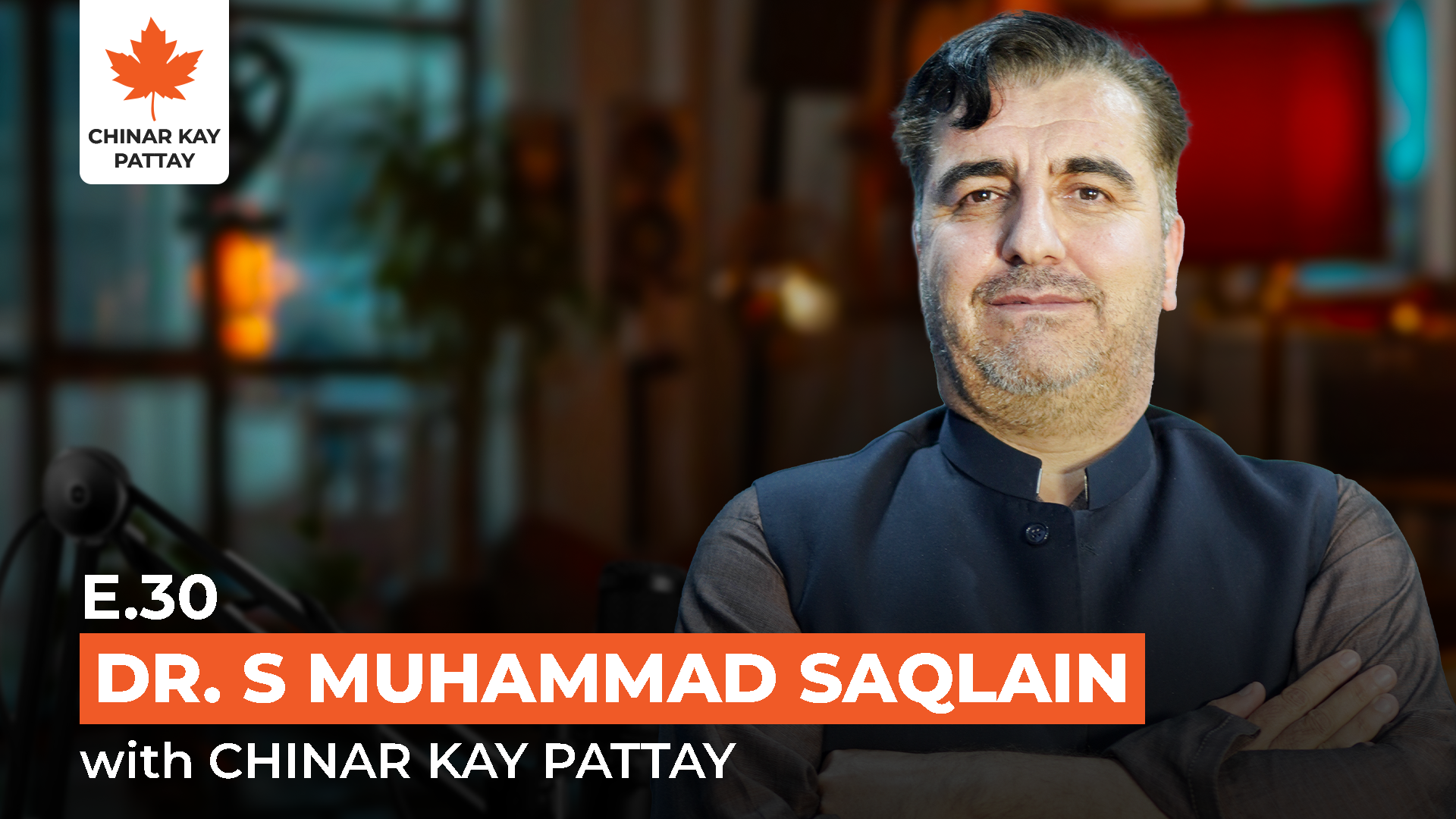
In Episode #030 of the Chinar Kay Pattay Podcast, host Shahid Hussain sits down with Dr. Syed Muhammad Saqlain, introduced in the episode as the only eye specialist and eye surgeon in Parachinar, for a detailed discussion about vision care, ophthalmology, common eye conditions, mobile-screen use, eye safety, patient behaviour, hospital challenges, and the future of eye-care professions.
The conversation is useful not only for people already experiencing eye problems, but also for anyone interested in preventing avoidable eye damage and understanding when professional medical care may be necessary.
Watch the Full Podcast
Chinar Kay Pattay Podcast #030
Guest: Dr. Syed Muhammad Saqlain
Host: Shahid Hussain
Profession: Eye Specialist / Eye Surgeon
Topic: Eye Health, Vision Care and Medical Challenges in Parachinar
The complete conversation is available on the official Chinar Kay Pattay YouTube channel.
Table of Contents
Episode Timestamps
00:00 — Trailer
01:22 — Introduction to Dr. Syed Muhammad Saqlain
05:14 — Why He Chose Ophthalmology
07:33 — Memorable Moments & Gifts from Patients
09:50 — Basic Eye Care Everyone Should Know
12:23 — Impact of Mobile Screens on Eyes
18:40 — Common Eye Diseases in Kurram & KPK
25:01 — Makeup & Eye Health
26:37 — Eye Care Tips for Farmers
28:59 — Shamkoor Disease Explained
30:27 — DHQ Hospital Kurram: Eye Department Issues
33:09 — Patient Behaviour: A Doctor’s Perspective
35:58 — Eye Protection Tips for Overseas Pakistanis
38:37 — Common Eye Diseases Awareness
41:51 — Using Mobile Phones in the Dark
44:12 — Eye First Aid at Home
45:15 — Why Students Avoid Optometry
48:07 — Who Supported Him Most
49:23 — Chinar Kay Pattay — Closing Segment
Dr. Syed Muhammad Saqlain’s Journey into Ophthalmology
Every medical specialty has its own challenges.
Ophthalmology is especially important because even a small eye problem can affect a person’s ability to read, work, drive, study, and move safely through everyday life.
In this episode, Dr. Syed Muhammad Saqlain discusses why he chose ophthalmology and how his professional journey developed.
The episode introduces him as the only eye specialist and eye surgeon in Parachinar.
If this description is confirmed by CKP before publication, it highlights an important healthcare issue for the region:
specialised medical services can become heavily dependent on a very limited number of professionals.
That creates pressure not only on doctors, but also on patients who may have fewer local options for specialised care.
Dr. Saqlain’s story therefore represents more than one medical career.
It raises a broader question about how regions like Kurram can build and retain more specialised healthcare capacity over time.
Why Basic Eye Care Matters
Many eye problems can become more serious when people ignore symptoms for too long.
At the same time, not every eye complaint is an emergency.
The challenge is knowing when basic care is enough and when professional assessment is necessary.
The podcast discusses general eye-care practices that people should understand.
Useful habits can include:
- protecting eyes from injury;
- avoiding unnecessary rubbing;
- maintaining hygiene;
- using prescribed glasses correctly;
- avoiding unverified eye drops;
- protecting eyes in dusty or hazardous environments;
- and getting professional assessment when symptoms persist or vision changes.
One of the most important principles is simple:
eye problems should not be treated casually just because they appear small.
Pain, sudden vision loss, significant injury, chemical exposure, or other serious symptoms may require urgent professional attention.
General awareness can help people recognise when waiting is not a good idea.
Mobile Screens and Eye Strain
Phones, tablets, laptops, and other digital screens have become part of everyday life.
Students use them for study.
Adults use them for work.
Young people use them for entertainment and social media.
The podcast discusses how extended screen use can affect the eyes and why people should pay more attention to their digital habits.
Long periods of screen use can be associated with symptoms such as:
- eye strain;
- dryness;
- tired eyes;
- headaches;
- difficulty focusing;
- and discomfort after prolonged viewing.
One reason is that people may blink less frequently when concentrating on a screen.
The problem is not simply that phones exist.
It is often how long, how closely, and under what conditions they are used.
Better habits may include taking regular breaks, avoiding unnecessarily close viewing distances, using comfortable lighting, and reducing prolonged uninterrupted screen exposure.
Anyone experiencing persistent eye discomfort or changes in vision should seek professional assessment rather than assuming the problem is only screen-related.
Common Eye Problems in Kurram and KPK
The episode includes a discussion about common eye conditions seen in Kurram and the wider Khyber Pakhtunkhwa context.
This is valuable because local disease patterns can affect what eye-care services a region needs most.
However, there is an important distinction between:
conditions commonly seen by one clinician
and
population-level prevalence across an entire district or province.
Without formal epidemiological data, a practitioner’s clinical experience should not automatically be presented as the exact prevalence of eye disease across Kurram.
The podcast is still useful because it helps people understand the kinds of problems for which patients may seek eye care.
For the public, the practical message is that symptoms should be assessed according to the individual rather than self-diagnosed from a list.
Eye disease can have different causes and may require different forms of treatment.
Makeup and Eye Health
Cosmetics used around the eyes can sometimes create problems when products are contaminated, expired, shared between people, or applied in ways that irritate the eye.
The episode discusses makeup-related eye issues as part of broader eye-health awareness.
The key principle is hygiene.
Products used close to the eye should be handled carefully.
People should be cautious about:
- sharing eye makeup;
- using expired products;
- applying cosmetics with dirty tools;
- continuing to use a product after irritation develops;
- or placing unapproved substances directly into the eye.
If redness, swelling, pain, discharge, or persistent irritation develops after using a cosmetic product, stopping the product and seeking professional advice may be appropriate.
Cosmetic appearance should never take priority over eye safety.
Eye Protection for Farmers
Farmers face a different set of eye risks than office workers or students.
Agricultural work can involve:
- dust;
- soil;
- plant material;
- chemicals;
- machinery;
- bright sunlight;
- wind;
- and flying particles.
The podcast discusses eye-care advice specifically for farmers.
This is an important topic for Kurram because agriculture remains a major part of local life and livelihoods.
Protective eyewear can be important when working in environments where particles, chemicals, or machinery create a risk of eye injury.
Farmers should also take care when handling pesticides, fertilizers, or other substances that may irritate or injure the eyes.
If a chemical or foreign object enters the eye, the correct response depends on the situation.
Serious injuries should not be treated through home remedies alone.
Prompt professional care can sometimes make an important difference in protecting vision.
Understanding “Shamkoor” Disease
The podcast includes a section described as “Shamkoor Disease Explained.”
Because “Shamkoor” appears to be a local or colloquial term, it should not automatically be translated into a specific medical diagnosis without confirming exactly what Dr. Saqlain means in the episode.
This is an important example of why local health terminology needs careful handling.
Communities often have familiar names for illnesses that do not correspond perfectly to formal medical terminology.
A local term may refer to:
- a symptom;
- a visible appearance;
- a group of conditions;
- or a specific disease.
Before CKP publishes a medical definition of “Shamkoor,” the exact condition discussed by Dr. Saqlain should be confirmed against the episode.
The broader lesson remains valuable:
local health language should be connected carefully with professional medical terminology so that people understand what condition is actually being discussed.
Challenges Facing the Eye Department at DHQ Kurram
Specialised medical care depends on more than having one qualified doctor.
It also requires a functioning system.
The episode discusses challenges at the eye department of DHQ Kurram.
Hospital-level eye care may depend on:
- trained staff;
- diagnostic equipment;
- surgical facilities;
- medicines;
- operating systems;
- patient flow;
- referral mechanisms;
- maintenance;
- and institutional support.
When one part of the system is weak, patients may experience delays or may need to travel elsewhere for care.
This can be particularly difficult for people who have limited financial resources or who live far from specialised facilities.
The issues described in the podcast are therefore important not only as a doctor’s workplace concerns.
They raise a broader question:
what minimum system is needed for reliable specialised eye care in Kurram?
Any detailed criticism of DHQ Hospital or claims about missing services should remain clearly attributed to the guest unless independently verified.
Patient Behaviour from a Doctor’s Perspective
Healthcare depends on both providers and patients.
The episode includes Dr. Saqlain’s perspective on patient behaviour.
Doctors may face challenges when patients:
- delay seeking care;
- stop treatment early;
- use medicines without proper advice;
- expect immediate results;
- rely on unverified remedies;
- or misunderstand the seriousness of a condition.
At the same time, healthcare professionals also have responsibilities.
Patients need:
- clear explanations;
- respectful communication;
- understandable instructions;
- realistic expectations;
- and an opportunity to ask questions.
A stronger healthcare relationship requires trust on both sides.
Patients should follow qualified advice responsibly.
Doctors should communicate in ways that ordinary people can understand.
Good healthcare is not only about diagnosis and medicine.
It is also about communication.
Eye Protection for Overseas Pakistanis
Many people from Kurram work abroad in environments that may expose them to different occupational hazards.
Construction, industrial labour, mechanical work, welding, dust, chemicals, sunlight, and long working hours can all create specific eye risks.
The podcast discusses eye-protection advice for overseas Pakistanis.
The most important general principle is prevention.
Workers should use proper protective equipment appropriate to their occupation.
Eye protection becomes especially important in workplaces involving:
- cutting;
- grinding;
- welding;
- chemicals;
- construction dust;
- or flying particles.
Small injuries can become serious if ignored.
Workers should not assume that an eye will automatically recover from every workplace incident.
Where vision is affected, pain is severe, or an injury involves chemicals or penetrating trauma, professional medical care may be urgent.
Recognising Eye Problems Early
Many people seek medical care only when a problem begins to interfere significantly with vision.
But earlier assessment can sometimes help identify problems before they become more severe.
The episode discusses common eye-disease awareness and encourages greater attention to eye health.
Some warning signs that deserve professional assessment can include:
- noticeable changes in vision;
- persistent pain;
- redness that does not resolve;
- unusual discharge;
- light sensitivity;
- significant injury;
- sudden visual disturbance;
- or symptoms that continue despite basic care.
These symptoms can have many different causes.
They should not be used for self-diagnosis.
The useful public-health message is that persistent or serious eye symptoms should not be ignored.
Using Mobile Phones in the Dark
Using a phone in a dark room is a common habit.
The podcast specifically discusses this behaviour and its effects on eye comfort.
When a bright screen is viewed in a very dark environment, the contrast can be uncomfortable and may contribute to eye strain for some users.
The practical response is not necessarily to stop using screens completely.
It is to use them more sensibly.
That can include:
- keeping some ambient light in the room;
- reducing excessive brightness;
- avoiding very long uninterrupted sessions;
- holding the device at a comfortable distance;
- and giving the eyes regular breaks.
Persistent headaches, discomfort, or vision problems should not automatically be blamed on phone use without proper assessment.
Eye First Aid at Home
Eye emergencies are situations where well-intentioned home treatment can sometimes make a problem worse.
The podcast discusses first aid for eye problems at home.
The most important principle is:
do not experiment with the eye.
For minor irritation, appropriate basic measures may sometimes help, but serious injuries need professional care.
People should be particularly cautious with:
- chemical exposure;
- sharp objects;
- penetrating injury;
- sudden vision loss;
- severe pain;
- heavy bleeding;
- or something firmly embedded in the eye.
Avoid putting unverified substances, traditional remedies, or random eye drops into an injured eye.
If chemicals enter the eye, immediate rinsing with clean water and urgent medical evaluation may be necessary.
If something is embedded in the eye, it should not be forcefully removed at home.
Because eye emergencies can threaten vision, uncertainty itself can be a reason to seek qualified help.
Why Fewer Students Choose Optometry
The episode also discusses why fewer students may be choosing optometry and other eye-care-related fields.
This is an important workforce question.
Healthcare systems cannot expand specialised services without trained people.
Ophthalmologists are one part of eye care.
Optometrists and other trained eye-care professionals can also play important roles in:
- vision assessment;
- refraction;
- screening;
- corrective lenses;
- early identification of problems;
- and referral.
If young people do not enter these fields, regions with already limited services may continue to face shortages.
Career awareness matters.
Students should understand not only the most familiar medical professions but also the wider range of healthcare careers that communities need.
This is particularly relevant for Kurram, where building local professional capacity could reduce dependence on specialists being available from elsewhere.
The Role of Support in a Medical Career
Toward the end of the episode, Dr. Saqlain discusses the people who supported him most.
Behind many professional careers is a network of encouragement.
Family members, teachers, mentors, colleagues, and institutions can all influence whether someone continues through years of education and specialised training.
This matters particularly in fields such as medicine, where training can require significant time, financial commitment, and personal discipline.
Support does not replace individual effort.
But it can make difficult paths more achievable.
For younger viewers, this part of the conversation also serves as a reminder that professional success rarely happens in complete isolation.
What This Conversation Means for Healthcare in Kurram
Episode #030 is about eye health, but it also raises a larger issue:
specialised healthcare requires systems and people.
A community needs qualified doctors.
But it also needs:
- equipment;
- trained supporting staff;
- functioning hospitals;
- referral systems;
- patient awareness;
- preventive care;
- and young professionals entering specialised fields.
Improving eye health in Parachinar therefore involves more than treating individual patients.
It also means helping people protect their eyes before problems occur.
It means recognising serious symptoms earlier.
It means improving health literacy.
It means supporting specialised medical services.
And it means building a larger pool of trained eye-care professionals over time.
Public awareness and healthcare infrastructure have to grow together.
Key Takeaways from the Episode
- Eye health affects education, work, mobility, safety, and quality of life.
- Basic eye-care habits and early professional assessment can help prevent some problems from becoming more serious.
- Long periods of screen use can contribute to eye strain and discomfort.
- Clinical experience should not automatically be treated as population-level disease prevalence.
- Eye makeup and cosmetics should be used hygienically and discontinued if they cause persistent irritation.
- Farmers may require eye protection against dust, chemicals, machinery, and other occupational hazards.
- The local term “Shamkoor” should be medically clarified before CKP publishes a formal disease definition.
- Specialised eye care depends on equipment, staff, hospital systems, and referral pathways as well as doctors.
- Good communication between doctors and patients is an important part of healthcare.
- Workers in hazardous environments should use appropriate protective eyewear.
- Persistent eye symptoms and sudden changes in vision should not be ignored.
- Bright screens in dark environments may contribute to discomfort or eye strain.
- Serious eye injuries should not be treated through random home remedies.
- Optometry and related professions can play an important role in expanding eye-care capacity.
- Building more local specialised healthcare expertise can strengthen Kurram’s health system over time.
Building Better Eye-Health Awareness in Parachinar
People often protect their eyesight only after something goes wrong.
But good eye health begins much earlier.
It begins with habits.
Using screens sensibly.
Protecting the eyes at work.
Avoiding unsafe products.
Taking injuries seriously.
Getting vision checked when problems persist.
And understanding that not every eye problem can be treated with a drop purchased without proper advice.
Dr. Syed Muhammad Saqlain’s conversation on the Chinar Kay Pattay Podcast brings these everyday issues together with the wider challenge of delivering specialised healthcare in District Kurram.
The episode also highlights something important about local healthcare capacity.
When a region depends on very few specialists, access becomes vulnerable.
Training more professionals, strengthening departments, improving equipment, and building awareness among patients all become part of the same challenge.
Better eye health in Parachinar will therefore require both:
better individual awareness
and
stronger healthcare systems.
For students, parents, farmers, workers, overseas Pakistanis, and anyone interested in protecting their vision, the full conversation offers useful points worth hearing directly from the specialist.
Watch the Full Episode
Watch Eye Health in Parachinar | Dr. Syed Muhammad Saqlain on Vision Care & Medical Challenges | Chinar Kay Pattay Podcast #030 on the official Chinar Kay Pattay YouTube channel.
Subscribe to Chinar Kay Pattay for more conversations about Kurram, healthcare, education, social issues, development, opportunities, and the region’s future.
Official Website
Facebook
Instagram
TikTok
If this conversation can help someone take better care of their eyesight or recognise when professional eye care may be necessary, consider sharing it with them.
Important: This article summarizes general eye-health themes discussed in the CKP podcast. It is for awareness and education and is not a substitute for diagnosis, treatment, or emergency medical care from a qualified healthcare professional.