
Agriculture has long been an important part of life in Parachinar and District Kurram. Farming supports household livelihoods, local food production, orchards, seasonal crops, and the wider rural economy.
The Parachinar agriculture crisis is not the result of one single issue. Farmers across Kurram are facing challenges related to seed quality, fertilizer use, soil fertility, fruit preservation, barren land, and changing weather patterns.
So what is actually going wrong?
Can better seed selection improve crop performance?
Are farmers using too much fertilizer?
Can greenhouse farming work in Kurram?
Can barren land become productive again?
And how can research, soil testing, better farming practices, and modern agricultural techniques help local farmers build a stronger future?
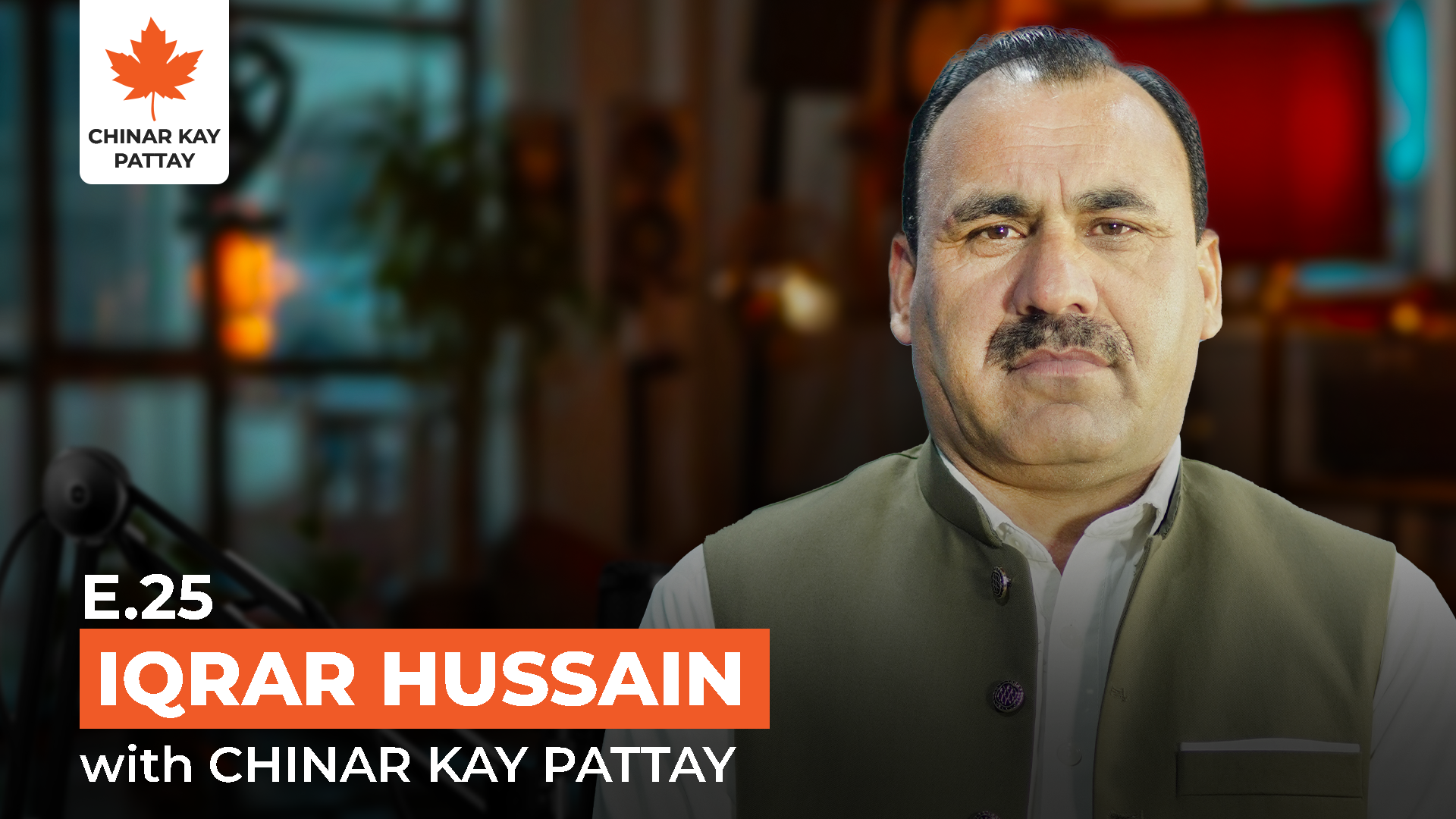
In Episode #025 of the Chinar Kay Pattay Podcast, host Shahid Hussain sits down with Iqrar Hussain, Senior Research Officer at the Agriculture Research Department, Parachinar, for an in-depth conversation about the challenges facing agriculture in Parachinar and District Kurram.
The discussion looks beyond individual farms and explores the wider factors affecting agricultural productivity—from seed quality and fertilizer practices to greenhouse farming, fruit preservation, barren land restoration, soil testing, and climate-related pressures.
For farmers, young people interested in agriculture, and anyone thinking about Kurram’s long-term food and economic future, this conversation raises an important question:
How can agriculture in Kurram become more productive, informed, resilient, and sustainable?
Watch the Full Podcast
Chinar Kay Pattay Podcast #025
Guest: Iqrar Hussain
Host: Shahid Hussain
Guest Role: Senior Research Officer, Agriculture Research Department, Parachinar
Topic: Parachinar’s Agriculture Crisis and the Future of Farming in Kurram
The complete conversation is available on the official Chinar Kay Pattay YouTube channel.
Table of Contents
Episode Timestamps
00:00:00 — Trailer
A glimpse into Parachinar’s agriculture crisis and the major issues discussed in the episode.
00:02:15 — Introduction & Why Is Agriculture Declining in Kurram?
Understanding the causes behind the decline of farming in Parachinar and District Kurram.
00:09:54 — The Quality of Seeds in Kurram
How seed quality affects crop performance and what farmers should consider.
00:15:34 — Greenhouse Farming in Kurram
Exploring greenhouse farming and its potential for local agriculture.
00:18:56 — Fruit Preservation in Kurram
Challenges in storing and preserving fruits and reducing post-harvest losses.
00:23:16 — Role of the Agriculture Department & Soil Testing
Why soil testing matters and how agricultural research can support farmers.
00:30:57 — Fruitful Trees on Barren Lands
Exploring whether unproductive land can be brought back into agricultural use.
00:34:23 — Beneficial Plants for Parachinar & Kurram
Discussion around crops and plants that may offer long-term value for farmers.
00:38:33 — When Trees Are Green but Fruits Are Weak
Understanding why apparently healthy trees may still produce poor-quality fruit.
00:42:20 — Choosing the Right Seeds & Fertilization Methods
Discussion on seed selection and balanced fertilizer use.
00:46:28 — The Dangers of Over-Fertilization
How excessive fertilizer use can negatively affect soil and crops.
00:50:14 — Reviving Kurram’s Barren Lands
Exploring possible steps for restoring soil productivity and abandoned agricultural land.
00:52:56 — Climate Change and Its Impact on Kurram’s Agriculture
How changing weather patterns may affect farming conditions and agricultural planning.
00:55:43 — Chinar Kay Pattay
Closing reflections on awareness, agriculture, and the future of farming in Parachinar.
Understanding the Parachinar Agriculture Crisis
Agricultural decline is rarely caused by one problem.
A farmer may see lower yields and immediately blame the weather.
Another may blame fertilizer.
Another may point to seeds, irrigation, pests, soil quality, or changing farming practices.
In reality, agricultural productivity often depends on several connected factors.
In this episode, Iqrar Hussain discusses the decline of agriculture in Parachinar and District Kurram and explores some of the issues that may be contributing to weaker farming outcomes.
These include concerns around:
- seed quality;
- fertilizer use;
- soil fertility;
- fruit quality;
- preservation losses;
- declining or abandoned farmland;
- and changing weather conditions.
The important point is that farmers should not look at these issues in isolation.
A good seed planted in poor soil may still perform badly.
Healthy soil cannot compensate for unsuitable seed.
Heavy fertilizer use cannot automatically correct every deficiency.
And even a productive orchard can lose value if the fruit cannot be stored, preserved, or marketed effectively.
That means the future of agriculture in Kurram depends not only on growing more.
It depends on understanding the whole agricultural system better.
Seed Quality and the Foundation of Better Farming
Seed quality is one of the most basic foundations of agriculture.
Farmers may invest time, land, water, fertilizer, labour, and money into a crop, but if the seed itself is unsuitable or poor quality, the results can be disappointing.
The episode focuses on the quality of seeds available to farmers in Kurram and why farmers need to think carefully about what they plant rather than selecting seed only because it is easily available or familiar.
The right seed may depend on several factors, including:
- local growing conditions;
- crop type;
- soil characteristics;
- disease resistance;
- climate;
- expected growing season;
- and the intended market or household use.
Seed selection should therefore be treated as a technical farming decision rather than a routine purchase.
This also points toward a larger need in Kurram:
farmers need reliable agricultural information alongside agricultural inputs.
Providing seed without guidance may solve only part of the problem.
Can Greenhouse Farming Work in Kurram?
Greenhouse farming is often discussed as a modern agricultural technique that can provide farmers with greater control over growing conditions.
The podcast explores the potential of greenhouse farming in Kurram and the role it could play for local farmers.
A greenhouse can create a more controlled environment for crops by helping farmers manage factors such as temperature and exposure.
But greenhouse farming should not automatically be treated as the right solution for every farmer.
Its usefulness depends on factors such as:
- crop selection;
- construction cost;
- temperature management;
- water availability;
- farmer skills;
- access to inputs;
- maintenance;
- market demand;
- and expected returns.
For Kurram, the real question is therefore not simply:
“Can we build greenhouses?”
It is:
“For which crops, locations, seasons, and farming models would greenhouse agriculture actually make sense?”
That distinction is important because agricultural technology becomes useful only when it fits local conditions.
The Challenge of Fruit Preservation
Growing fruit is only one part of the agricultural value chain.
The next challenge is keeping that fruit in good condition long enough for it to be consumed, transported, processed, or sold.
The conversation also examines fruit preservation in Kurram and the losses farmers can face after harvesting.
This is especially important for areas where farmers may produce seasonal fruit within a limited period.
Without proper handling and preservation, a farmer can produce a good crop and still lose economic value after harvest.
Fruit losses can occur because of:
- poor harvesting practices;
- handling damage;
- inadequate storage;
- delayed transport;
- temperature exposure;
- limited processing;
- or weak access to markets.
This means improving agriculture is not only about productivity per acre.
It is also about what happens after the crop leaves the field or orchard.
For Kurram, stronger fruit preservation could eventually involve better handling, storage, cold-chain systems, processing, or other methods—but each option would require proper feasibility and planning.
Soil Testing and the Role of the Agriculture Department
Farmers often make decisions based on what they can see.
A crop looks weak.
Leaves change colour.
Fruit quality falls.
Growth slows.
The natural response may be to add more fertilizer.
But without understanding the soil, that response can sometimes create another problem.
The conversation highlights the role of the Agriculture Department and the importance of soil testing.
Soil testing can help provide farmers with better information about their land before they decide how to treat it.
Instead of asking:
“Which fertilizer should I add?”
a better starting point may be:
“What does this soil actually need?”
That shift—from assumption to evidence—is important.
Agriculture becomes more efficient when farmers can make decisions based on the actual condition of their soil rather than relying entirely on habit or guesswork.
The Agriculture Research Department can therefore play an important role not only through research, but also by helping agricultural knowledge reach farmers in practical form.
Can Barren Land Become Productive Again?
Kurram contains land that may currently be underused, abandoned, or considered agriculturally weak.
The podcast explores the possibility of planting productive trees on barren land and bringing suitable areas back into agricultural use.
This is an important subject because not every piece of land needs to produce the same crop.
Land that performs poorly under one agricultural use may have potential under another.
But restoring or developing barren land requires careful analysis.
Important questions include:
- Why is the land unproductive?
- Is the problem soil quality?
- Water availability?
- Erosion?
- Lack of organic matter?
- Poor crop selection?
- Abandonment?
- Climate exposure?
Only after understanding the cause can the right response be considered.
In some cases, particular trees or crops may be better suited than conventional cultivation.
But the principle remains the same:
land use should follow local evidence, not assumptions.
Choosing Crops and Plants for Kurram
The conversation also considers plants and crops that may be beneficial for Parachinar and Kurram.
This is directly connected to a larger question about the region’s agricultural future.
Which crops actually make sense locally?
A crop may be attractive because it has a high selling price elsewhere, but that alone does not make it suitable for Kurram.
Farmers and agricultural planners need to consider:
- climate suitability;
- soil requirements;
- water demand;
- growing season;
- labour;
- pest and disease risks;
- storage needs;
- market access;
- and expected demand.
A locally appropriate crop should fit into both the natural environment and the economic environment.
This is especially important when discussing agriculture as part of Self-Sustainability.
The goal should not be to grow everything locally.
The goal should be to identify agricultural activities that are technically appropriate, economically sensible, and useful for local livelihoods and food systems.
Why Healthy-Looking Trees Can Still Produce Weak Fruit
A tree can look green and healthy while still producing poor-quality fruit.
Iqrar Hussain discusses this farming problem and why visual appearance alone may not tell farmers everything about the health or productivity of a tree.
Poor fruit quality may be connected to different factors, including nutrition, soil conditions, variety, water management, disease, pollination, pruning, or other cultivation practices.
The larger lesson for farmers is that visual appearance alone may not be enough for diagnosis.
When productivity falls, the response should not automatically be:
“Add more fertilizer.”
The first step should be understanding the actual problem.
This is where agricultural expertise, field assessment, and soil or plant analysis can become valuable.
Choosing the Right Seeds and Using Fertilizer Wisely
The podcast brings two important decisions together:
seed selection and fertilization.
Both can significantly influence agricultural outcomes.
But both can also create problems when used without sufficient knowledge.
Farmers may sometimes continue using the same seeds or the same fertilizer routine year after year because that is what they have always done.
Yet agricultural conditions can change.
Soil fertility can change.
Crop requirements differ.
Weather patterns vary.
And not every field has the same nutrient needs.
Better farming therefore requires farmers to think in terms of balanced input use.
More input is not automatically better input.
The Risks of Over-Fertilization
One of the clearest warnings in the episode concerns excessive fertilizer use.
Iqrar Hussain discusses the dangers of over-fertilization and why simply adding more fertilizer does not automatically lead to stronger crops or better yields.
Farmers understandably want stronger plants and higher yields.
That can create the assumption that applying additional fertilizer will automatically improve production.
But agricultural inputs should be used according to crop and soil requirements.
Excessive fertilizer can create problems rather than solving them.
The practical message is simple:
fertilizer should be applied because the crop and soil need it—not simply because more fertilizer feels like more farming.
This again highlights the importance of soil testing, farmer education, and better access to agricultural guidance.
Reviving Kurram’s Barren Lands
The discussion returns to Kurram’s barren or abandoned agricultural land and the question of whether some of it can be brought back into productive use.
Bringing such land back into production could potentially contribute to local agriculture, but restoration should begin with understanding why the land became unproductive.
There is no single method that will work everywhere.
Depending on the location, improvement might involve better soil management, suitable crops or trees, water management, organic matter, erosion control, or a completely different land-use strategy.
The important idea is that barren land should not automatically be considered permanently useless.
But neither should every piece of barren land automatically be converted into farmland.
The right use depends on environmental conditions, economics, water, and long-term sustainability.
Climate Change and Agriculture in Kurram
The episode also discusses climate change and its potential impact on agriculture in Kurram.
Agriculture is closely connected to weather.
Changes in temperature, rainfall patterns, seasonal timing, frost conditions, drought, or extreme weather can affect:
- planting;
- flowering;
- fruit development;
- harvesting;
- water requirements;
- pest pressure;
- and overall yields.
For farmers, this creates a challenge.
Practices that worked reliably in the past may not always perform in exactly the same way in the future.
That makes agricultural adaptation increasingly important.
Farmers may need better information, improved crop selection, water management, protective cultivation techniques, and stronger access to agricultural research.
The episode’s discussion reinforces a broader point:
the future of agriculture in Kurram will require both traditional farming knowledge and modern agricultural science.
What This Conversation Means for the Future of Farming
The biggest lesson from Episode #025 is that Kurram’s agricultural challenges cannot be solved by one intervention.
Better seeds alone are not enough.
More fertilizer is not enough.
A greenhouse alone is not enough.
Planting trees on barren land is not enough.
The system involves many connected parts:
Seed
→ Soil
→ Water
→ Farmer Knowledge
→ Crop Management
→ Harvest
→ Storage
→ Transport
→ Market
Weakness at one stage can reduce the value created at another.
That means agricultural development in Kurram requires a shift from thinking only about individual farming inputs toward thinking about the complete agricultural system.
Research institutions have a role.
Farmers have a role.
Markets matter.
Infrastructure matters.
Training matters.
And local experimentation matters.
Most importantly, farmers need information that helps them decide what works under Kurram’s actual conditions.
Addressing the Parachinar agriculture crisis therefore requires more than increasing production. It requires stronger knowledge, better farm decisions, improved post-harvest systems, appropriate technology, and closer connections between farmers and agricultural research.
Key Takeaways from the Episode
- Agricultural decline in Kurram should be understood as a combination of several connected challenges rather than one isolated problem.
- Seed quality can strongly influence crop performance and should be selected according to local conditions.
- Greenhouse farming may offer opportunities, but it should be evaluated for specific crops and farming models.
- Fruit preservation and post-harvest management are important parts of agricultural productivity.
- Soil testing can help farmers make more informed fertilizer and land-management decisions.
- Barren or underused land may have agricultural potential, but the right use depends on local conditions.
- Crop selection should consider climate, soil, water, markets, and economic viability.
- Healthy-looking trees do not necessarily guarantee high-quality fruit.
- Excessive fertilizer use should not replace proper diagnosis and balanced nutrient management.
- Climate-related changes may require farmers to adapt agricultural practices over time.
- Stronger links between farmers and agricultural research can improve decision-making.
- Kurram’s agricultural future depends on strengthening the full system, not simply increasing inputs.
A Stronger Agricultural Future for Kurram
Agriculture in Kurram does not need only more farming.
It needs better-informed farming.
That means understanding the soil before treating it.
Choosing the right seed rather than simply the available seed.
Using fertilizer according to need rather than habit.
Exploring new techniques where they make practical sense.
Reducing losses after harvest.
Making better use of suitable land.
And connecting farmers more closely with research, technical knowledge, and changing environmental realities.
Iqrar Hussain’s conversation on the Chinar Kay Pattay Podcast provides an important starting point for thinking about these issues.
The future of farming in Kurram will not be built through one crop, one technology, or one government programme.
It will depend on farmers, researchers, institutions, markets, and communities learning how to make the entire agricultural system stronger.
The Parachinar agriculture crisis should therefore be seen not only as a warning, but also as a reason to improve how agricultural decisions are made across the region.
For anyone interested in agriculture, food security, farming livelihoods, or Kurram’s long-term development, the complete episode is worth watching.
Watch the Full Episode
Watch Parachinar’s Agriculture Crisis ft. Iqrar Hussain (Senior Research Officer) | Chinar Kay Pattay Podcast #025 on the official Chinar Kay Pattay YouTube channel.
Subscribe to Chinar Kay Pattay for more conversations about Kurram, its people, development challenges, agriculture, entrepreneurship, culture, and future.
Official Website
Facebook
Instagram
TikTok
If you know a farmer, student, agricultural professional, or someone interested in the future of farming in Kurram, share this conversation with them.