Conversation connected with Kurram District
On this page
Table of Contents
خلاصہ
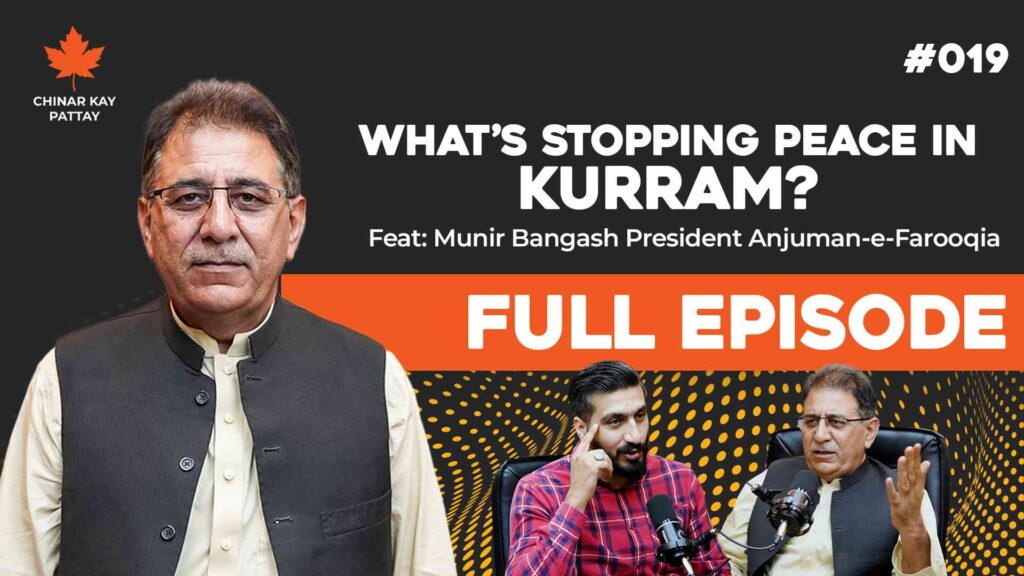
اس ایپی سوڈ میں انجمن فاروقیہ کے صدر منیر بنگش سے اس سوال پر بات چیت ہے کہ کرم میں امن کیوں نہیں ہو پا رہا۔ پختونوں میں اتحاد کی کمی، کمزور ہوتا جرگہ سسٹم، زمین کے تنازعے اور سوشل میڈیا کا کردار اس گفتگو کا حصہ ہیں۔ ان کے مطابق تعلیم اور نوجوانوں کو آگے لانا امن کا راستہ ہے۔
In Episode #019 of the Chinar Kay Pattay Podcast, we speak with Munir Bangash, President of Anjuman e Farooqia in Kurram District, about why lasting peace in Kurram has been so hard to achieve.
He discusses unity among the Pakhtoon people, the weakening of the Jirga system, land disputes and the role of social media, and sets out the paths to peace he sees through education and empowerment.
Guest: Munir Bangash, President, Anjuman e Farooqia
Topic: Obstacles to peace in Kurram
Episode: #019
Podcast Overview
Key Topics Discussed
- Obstacles to Pakhtoon Unity
- Munir highlights the significance of unity among the Pakhtoon people, emphasizing that internal divisions prevent them from effectively addressing their common challenges.
- The Declining Effectiveness of the Traditional Jirga System
- The traditional Jirga system has long been a cornerstone of conflict resolution in Pakhtoon culture. However, Munir discusses its recent decline and the implications of this shift for maintaining order and resolving disputes.
- Unresolved Land Disputes
- Land disputes continue to spark conflicts in Kurram District. Munir provides insights into the historical and social contexts of these disputes, which often exacerbate tensions between communities.
- Impact of Social Media on Violence and Hatred
- Munir addresses the negative role that social media plays in fueling hatred and violence, arguing that it amplifies divisions rather than fostering dialogue and understanding.
- Proposed Solutions
- The conversation also covers potential pathways to peace, including economic growth, education, and women’s empowerment. Munir emphasizes that these solutions are vital for creating a more cohesive and peaceful society.
Detailed Discussion
Pakhtoon Unity
Unity among the Pakhtoon people is not just a cultural ideal; it is essential for navigating the complexities of modern conflicts. Munir underscores the historical solidarity among Pakhtoon tribes, which has been eroded by external influences and internal divisions. Current challenges, including political fragmentation and social stratification, have created a landscape where unity is harder to achieve.
Significance of Unity:
- Collective Strength: A unified Pakhtoon front can address regional issues more effectively.
- Shared Identity: Emphasizing a common identity can help bridge existing divides.
Jirga System
The Jirga system has traditionally served as a local forum for conflict resolution among the Pakhtoon. However, Munir explains that its effectiveness has declined in recent years due to various factors:
- Loss of Authority: Traditional elders, once respected arbiters of justice, are losing their influence.
- Alternative Conflict Resolution: Many now turn to state authorities or informal means, sidelining the Jirga.
Implications for Conflict Resolution:
- As the Jirga system falters, the reliance on more formal legal frameworks may not address the culturally rooted nature of conflicts in Kurram.
Land Disputes
Land disputes in Kurram District are often rooted in historical grievances and social inequities. Munir provides a detailed account of how these unresolved issues perpetuate cycles of violence:
- Historical Context: Many land conflicts date back generations, with memories of past injustices lingering in community narratives.
- Social Impact: Land disputes not only affect individuals but also entire communities, leading to long-standing enmities.
Consequences of Land Disputes:
- Increased tensions can lead to violent confrontations, undermining any efforts toward reconciliation.
Social Media’s Role
In today’s digital age, social media has emerged as a double-edged sword. While it can facilitate communication, Munir highlights its role in exacerbating existing tensions:
- Hate Speech: Social media platforms often become breeding grounds for hate speech and misinformation.
- Polarization: The echo chambers created by social media amplify divisions, making constructive dialogue increasingly difficult.
Mitigating Negative Effects:
- Munir advocates for proactive measures, including media literacy campaigns, to combat the harmful influence of social media.
Paths to Peace
Munir offers several alternative paths to peace that are essential for fostering a harmonious society:
- Economic Growth:
- Encouraging economic development can alleviate poverty and provide opportunities for marginalized communities, reducing tensions.
- Education:
- Investing in education can empower future generations to engage in constructive dialogue and become advocates for peace.
- Women’s Empowerment:
- Empowering women is critical for sustainable peace, as they play a pivotal role in community development and conflict resolution.
Insights from Munir Bangash
Throughout the podcast, Munir shared profound insights that resonate with anyone invested in peacebuilding. Some memorable quotes include:
- “Unity among the Pakhtoon is not just a goal; it is a necessity for our survival and progress.”
- “We cannot ignore the role of our traditions, but we must adapt them to the realities of today.”
- “True empowerment comes when every voice is heard, especially those of women and the marginalized.”
These statements encapsulate Munir’s call for a collective effort toward dialogue and understanding.
Conclusion
The conversation with Munir Bangash offers critical insights into the challenges facing Kurram District and the broader Pakhtoon community. From the obstacles to unity to the declining effectiveness of traditional conflict resolution mechanisms, the issues are complex and interwoven. However, the proposed solutions centered on economic growth, education, and women’s empowerment provide a hopeful roadmap for achieving lasting peace.
We encourage readers to engage with this vital content. Watch the full episode of the podcast here, and feel free to share your thoughts in the comments below.
Watch more from Chinar Kay Pattay
Watch every episode on the Chinar Kay Pattay YouTube channel, or browse all episodes on the website.
Know someone from Kurram whose knowledge should be recorded? Suggest a guest on WhatsApp. Follow CKP on Facebook, Instagram and TikTok.