
Table of Contents
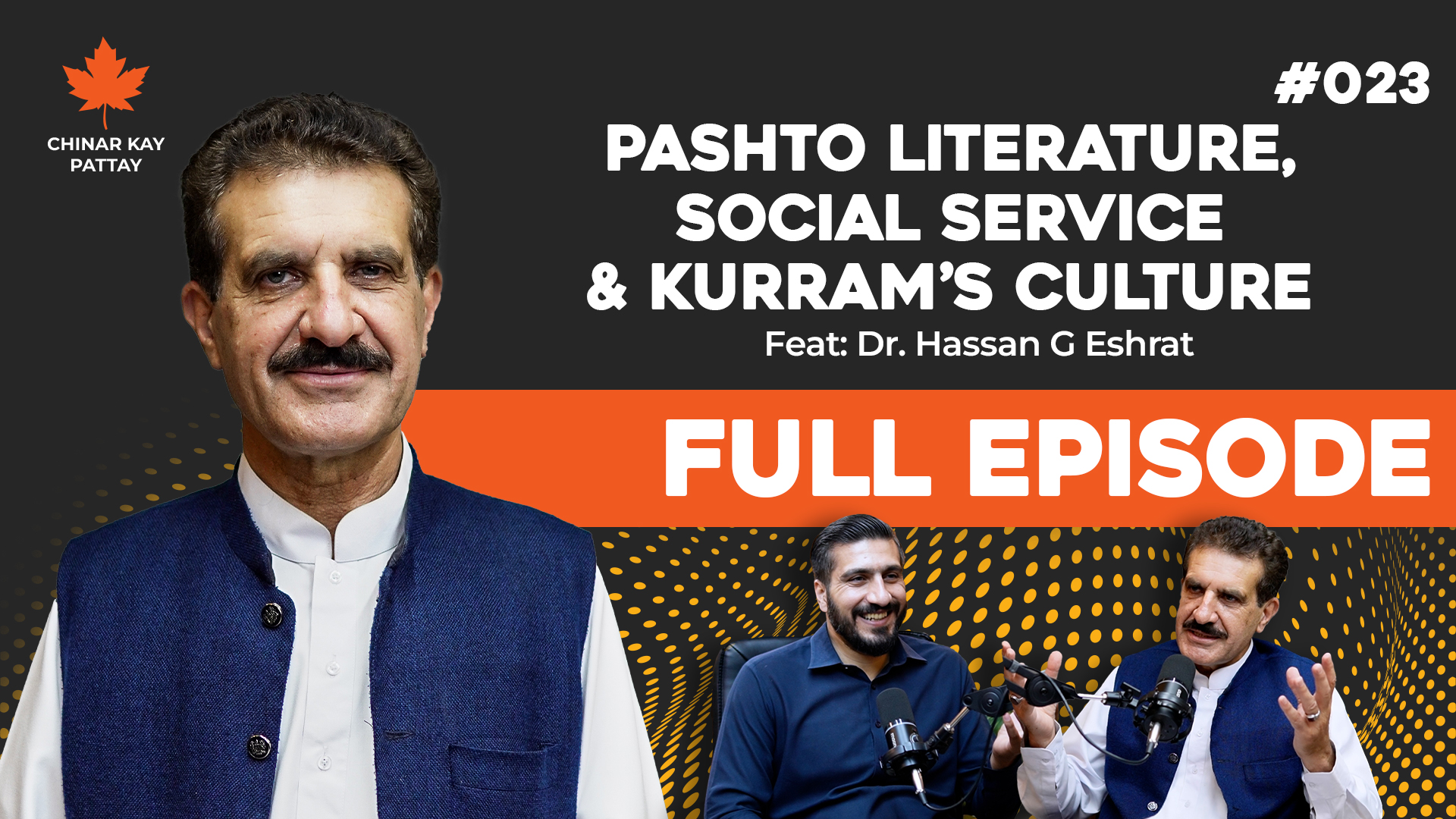
In Episode 23 of the Chinar Kay Pattay Podcast, we had the honour of hosting Dr. Hassan Gul Eshrat—a poet, academic, cultural researcher, and Director at the Senate of Pakistan—for a thoughtful conversation on Pashto literature, poetry, cultural identity, and the future of young writers.
Pashto literature is not only a form of artistic expression. It carries the history, emotions, traditions, and intellectual life of the people who speak it. For communities such as Kurram, literature can preserve local memory, give language to shared experiences, and help younger generations remain connected to their roots.
Dr. Eshrat’s journey as a writer and researcher offers an important message: language, culture, and education must be treated as living resources. They should be discussed, studied, written about, and passed forward.
Watch the Full Episode Now:
Dr. Hassan Gul Eshrat: Background and Educational Journey
At the beginning of the discussion, Dr. Hassan Gul Eshrat reflects on the experiences that shaped his educational and literary path. His journey shows how a person’s relationship with language develops through learning, observation, reading, and engagement with society.
For young people, especially those from areas with limited resources, education is not only about obtaining degrees. It builds confidence, broadens perspective, and helps people understand the role they can play in their community.
Dr. Eshrat’s life demonstrates that knowledge and creativity are closely connected. A person who reads deeply, observes carefully, and remains curious can contribute meaningfully to culture and society.
Pashto Literature and the Love of Poetry
Pashto poetry has long been one of the strongest expressions of Pashtun culture. It carries love, grief, humour, resistance, spirituality, memory, and social awareness. During the conversation, Dr. Eshrat discusses the importance of Pashto literature and how an interest in poetry can grow into a lifelong commitment.
Literature gives people a way to understand themselves and their surroundings. It also creates a connection between generations. The words of a poet can travel beyond one time or place and continue to speak to readers years later.
For aspiring writers, the message is simple: read widely, listen carefully, and keep writing. Poetry does not begin with fame; it begins with a genuine relationship with language.
Kurram’s Culture, Traditions, and Identity
Kurram is a region rich in language, traditions, customs, and stories. Its cultural identity is shaped by the experiences of its people, its geography, and its long history.
Dr. Eshrat’s discussion highlights why local traditions matter. When communities stop recording their stories, languages, and memories, valuable parts of their identity can disappear. Literature, research, and meaningful conversations can help preserve these traditions.
Kurram’s culture should not only be remembered during special occasions. It should be documented, discussed in schools and homes, and represented through books, poetry, music, and digital platforms.
Challenges Facing Pashto Literature
Like many regional languages and literary traditions, Pashto literature faces challenges. Young writers may lack access to books, mentors, publishing opportunities, and platforms where their work can reach readers.
There is also a need to strengthen the culture of reading. A literary tradition survives not only through writers but also through readers, teachers, publishers, researchers, and community institutions.
Pashto literature needs spaces where emerging poets and writers can learn, receive feedback, and share their work. Schools, colleges, libraries, literary gatherings, and digital media can all play an important role in this process.
Literature in Social and Political Times
Literature is closely connected to the world around it. Social and political conditions influence the questions writers ask, the stories they tell, and the emotions they express.
In this episode, Dr. Eshrat discusses how present circumstances can affect Pashto literature. Poetry and writing can help people reflect on difficult realities without losing their humanity, hope, or cultural confidence.
A society that values literature creates room for thoughtful discussion. It gives people a way to examine their challenges, understand different perspectives, and imagine a better future.
A Life as a Director, Poet, Writer, and Researcher
Dr. Hassan Gul Eshrat’s work brings together several roles: public service, poetry, writing, and research. Each role adds to the other.
His work as a researcher helps him examine culture and society in depth. His poetry gives him a creative way to express ideas and emotions. His public role allows him to remain engaged with wider institutional and social questions.
This is an important lesson for young people: creative work and professional life do not have to be separate. A person can build a meaningful career while continuing to write, learn, research, and serve the community.
Da Eshrat Latoon: A Recently Published Book
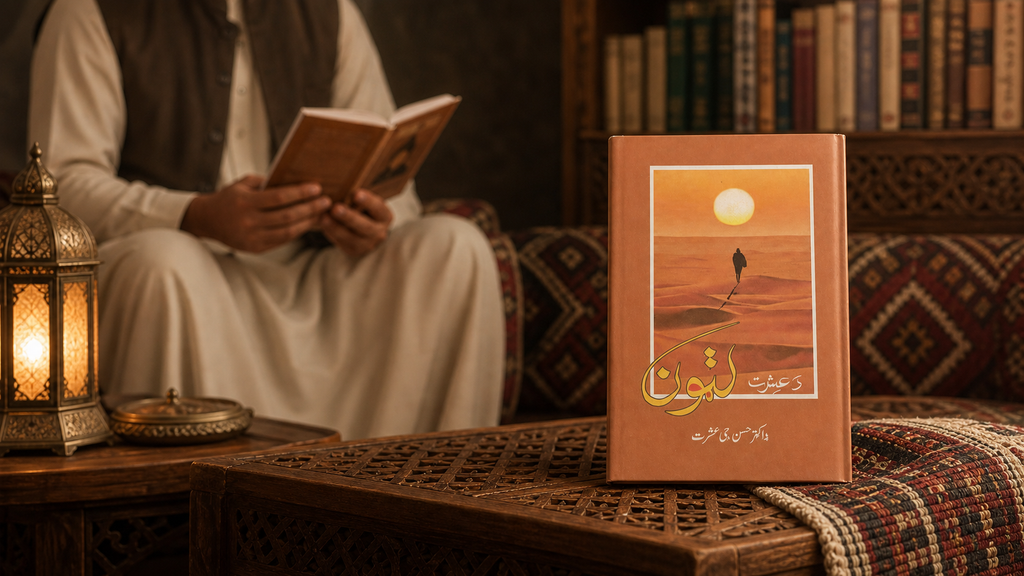
One of the important moments in the conversation is the discussion of Dr. Eshrat’s recently published book, Da Eshrat Latoon.
A book gives a writer’s thoughts a lasting place. It allows readers to return to ideas, poems, and research long after a conversation has ended. For young writers, published work is also a reminder that consistent effort can eventually become a meaningful contribution to literature.
Books remain important even in the digital age. They protect ideas, preserve language, and create a bridge between writers and future generations.
Why Poetry Still Matters
Poetry can say what ordinary conversation sometimes cannot. It gives people a way to express feelings, memories, hopes, and social concerns with depth and beauty.
In Pashto culture, poetry has a special place because it connects language with identity. It carries the voice of the individual while also reflecting the experience of the wider community.
Poetry matters because it keeps people emotionally connected to their language. It helps preserve cultural memory and gives writers a way to transform personal experience into something others can understand.
Kurram Welfare Society and Community Responsibility
The discussion also touches on the history and role of the Kurram Welfare Society. Community organisations are important because they turn shared concerns into practical work.
Whether the focus is education, culture, welfare, youth development, or public awareness, such institutions can create spaces where people work together for long-term progress.
A strong community does not depend only on individuals. It depends on organisations that remain committed to service, cooperation, and the welfare of future generations.
Critical Thinking and the Role of Young People
One of the most important themes of the episode is critical thinking. Young people need more than information; they need the ability to read carefully, compare ideas, question assumptions, and form thoughtful opinions.
Literature can help develop this ability. Reading poetry, history, essays, and stories exposes people to different experiences and perspectives. It teaches patience, reflection, and independent thinking.
For the youth of Kurram, critical thinking can become a powerful tool. It can help them engage more responsibly with social media, education, culture, and community issues.
Advice for Young Poets and Writers
Dr. Eshrat’s message for young poets and people interested in Pashto literature is encouraging. The path of a writer requires patience, discipline, and commitment.
Young writers should read regularly, practise their craft, learn from experienced writers, and remain connected to their language and community. They should not be discouraged by slow progress or limited opportunities.
Every meaningful writer begins as a reader. Every strong voice develops through time, practice, and honest engagement with life.
The Future of Pashto Literature
The future of Pashto literature depends on the next generation. If young people read, write, research, publish, and use digital platforms responsibly, Pashto literature can reach wider audiences while remaining rooted in its cultural identity.
Schools, colleges, community groups, and online platforms all have a role to play. Literature should be made accessible, especially for young people who may not otherwise have access to books, mentors, or literary spaces.
Pashto literature is not only a legacy from the past. It is a living source of creativity, knowledge, and cultural strength.
Conclusion
Episode 23 of the Chinar Kay Pattay Podcast is an important conversation for anyone who cares about Pashto literature, poetry, culture, and the future of young writers.
Dr. Hassan Gul Eshrat reminds us that literature is not separate from society. It helps preserve heritage, strengthen identity, encourage critical thought, and create meaningful dialogue.
The future of Pashto literature will depend on those who continue to read, write, research, and share their language with pride and responsibility.
Watch the Full Episode
Watch the complete conversation with Dr. Hassan Gul Eshrat on the Chinar Kay Pattay YouTube channel:
Small Request
If you found this discussion valuable, please share it with students, writers, poetry lovers, and anyone interested in the culture of Kurram.
Subscribe to the Chinar Kay Pattay YouTube channel and follow us on Facebook, Instagram, and TikTok for more conversations that highlight the voices, ideas, and stories of our community.